

Essential Guide to 12 Volt Camping Fridges: How Battery and Solar Power Work
- Royce Faggotter

- 14 hours ago
- 4 min read
Camping trips offer a chance to escape the daily grind and enjoy nature, but keeping your food fresh and drinks cold can be a challenge. That’s where 12 volt camping fridges come in. These compact, energy-efficient fridges run on 12-volt power sources, making them perfect companions for outdoor adventures. Understanding how they work with batteries and solar power can help you choose the right setup and keep your supplies chilled no matter where you camp.
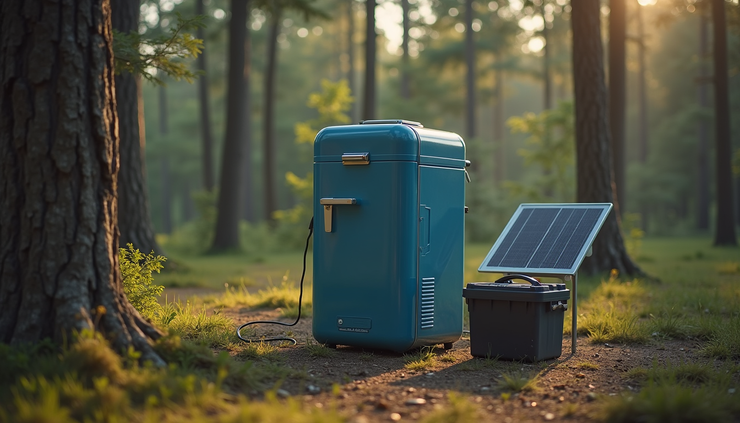
What Makes 12 Volt Camping Fridges Ideal for Outdoor Use
Unlike traditional household refrigerators that require 110-240 volts from mains electricity, 12 volt camping fridges operate on low voltage DC power. This allows them to run directly off vehicle batteries, portable battery packs, or solar power systems. Their design focuses on energy efficiency and portability, which are essential for camping.
Key benefits include:
Low power consumption: They use less energy than standard fridges, preserving battery life.
Portability: Compact and lightweight, easy to carry and fit in vehicles.
Versatility: Can be powered by car batteries, deep cycle batteries, or solar panels.
Temperature control: Adjustable settings to keep food fresh or freeze items.
These features make 12 volt fridges a must-have for campers who want fresh food without relying on ice or frequent grocery runs.
How 12 Volt Batteries Power Camping Fridges
The heart of a 12 volt camping fridge setup is the battery. Most commonly, these fridges connect to a 12 volt deep cycle battery, which is designed to provide steady power over long periods and withstand repeated charging and discharging cycles.
Types of Batteries Used
Lead-acid batteries: Affordable and widely available, but heavier and require maintenance.
AGM (Absorbent Glass Mat) batteries: Maintenance-free, more durable, and better suited for deep cycling.
Lithium-ion batteries: Lightweight, high capacity, longer lifespan, but more expensive.
Battery Capacity and Runtime
Battery capacity is measured in amp-hours (Ah). For example, a 100 Ah battery can theoretically supply 1 amp for 100 hours or 5 amps for 20 hours. The actual runtime depends on the fridge’s power draw, which typically ranges from 40 to 60 watts.
Example:
A fridge using 50 watts at 12 volts draws about 4.2 amps (50W ÷ 12V = 4.2A). A 100 Ah battery would last roughly 24 hours (100 Ah ÷ 4.2 A ≈ 24 hours) before needing a recharge.
Battery Management Tips
Avoid draining the battery below 50% to extend its life.
Use a battery monitor to track charge levels.
Recharge batteries promptly after use.
Consider a dual battery system in your vehicle to avoid draining the starter battery.
Using Solar Power to Keep Your Fridge Running
Solar power offers a renewable way to keep your 12 volt camping fridge running without relying solely on batteries or vehicle power. A solar setup typically includes solar panels, a charge controller, and a battery bank.
How Solar Panels Work with Camping Fridges
Solar panels convert sunlight into electricity, which charges the batteries powering the fridge. The charge controller regulates the voltage and current to prevent overcharging and damage to the batteries.
Choosing the Right Solar Panel Size
The size of the solar panel depends on your fridge’s power consumption and daily sunlight availability.
A 100-watt solar panel can produce about 30-40 amp-hours per day in good sunlight.
For a fridge drawing 4 amps continuously, you need enough solar capacity to cover that usage plus losses.
Example:
If your fridge uses 4 amps for 24 hours, that’s 96 amp-hours daily. You would need multiple solar panels or a larger battery bank to maintain power without draining batteries.
Benefits of Solar Power for Camping Fridges
Extends battery life by providing continuous charging.
Enables longer off-grid stays.
Reduces reliance on vehicle engine running for power.
Quiet and environmentally friendly.
Practical Tips for Using 12 Volt Camping Fridges Efficiently
To get the most out of your camping fridge, consider these practical tips:
Pre-chill food and drinks before packing to reduce fridge workload.
Keep the fridge in the shade to improve efficiency.
Limit how often you open the fridge to maintain temperature.
Use insulation covers designed for camping fridges.
Monitor battery levels regularly to avoid unexpected power loss.
Combine solar and battery power for longer trips.
Common Misconceptions About 12 Volt Camping Fridges
Some campers hesitate to invest in 12 volt fridges due to myths or misunderstandings:
Myth: They drain car batteries quickly.
When used properly with a deep cycle or dual battery system, they don’t affect your vehicle’s starter battery.
Myth: Solar panels can’t power fridges reliably.
With the right panel size and battery storage, solar setups can keep fridges running for days.
Myth: They don’t cool as well as regular fridges.
Many 12 volt fridges can reach temperatures below freezing, suitable for frozen goods.
Choosing the Right 12 Volt Camping Fridge for Your Needs
When selecting a fridge, consider:
Size and capacity: Match to your group size and trip length.
Power consumption: Look for energy-efficient models.
Cooling type: Compressor fridges cool faster and handle heat better than thermoelectric models.
Portability: Weight and dimensions matter for transport.
Additional features: Temperature control, battery protection, and digital displays.
Summary
A 12 volt camping fridge powered by batteries and solar panels offers a reliable way to keep food fresh and drinks cold during outdoor adventures. Understanding how these fridges work with 12 volt batteries and solar power helps you plan your setup for longer, more comfortable trips. By choosing the right fridge, managing your battery use, and integrating solar charging, you can enjoy fresh meals and chilled beverages no matter where you camp.
Comments